
Thyroid hormone effects
-
Principles and Practical tips for Reverse T3, FT3, FT4
This post follows up on several recent posts on the topic of Reverse T3 (RT3) and our thyroid hormone conversion enzymes, the three deiodinases. Here I’m providing some practical tips about Reverse T3 testing, test interpretation, and where we should be focusing our attention. In these posts, I aim to improve thyroid therapy by debunking…
-
Deiodinase Type 3, not RT3, plays the T3-blocking role
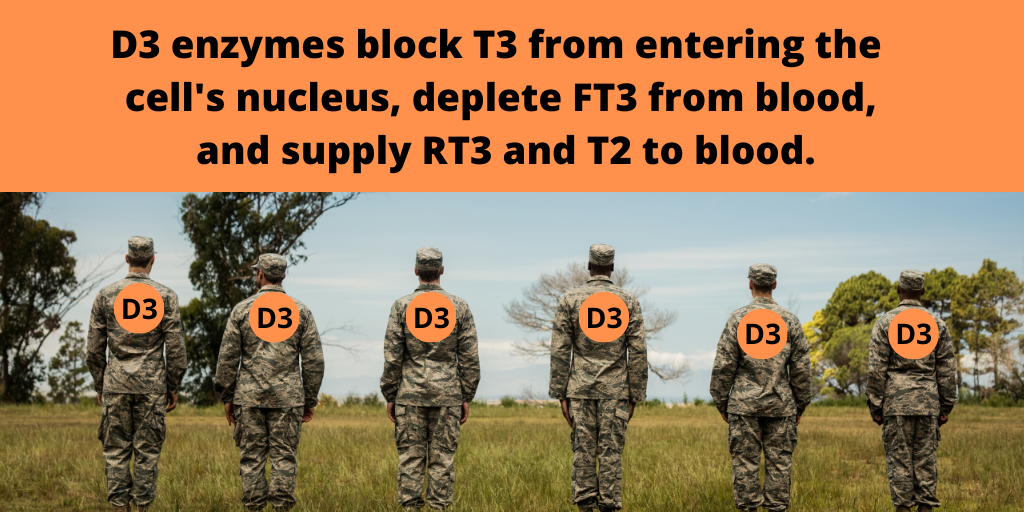
A lot of internet myths and misinformation surrounds Reverse T3 (RT3). Well-meaning people have attributed to the hormone a “T3-blocking” function. However, the enzyme deiodinase type 3 (D3) (NOT Vitamin D3, which is very different) is the main blocker of T3 hormone. Deiodinase type 3 (D3), regulated by the DIO3 gene, is the enzyme that…
-
Visualizing thyroid hormone activity in cells: T3 and RT3 in context
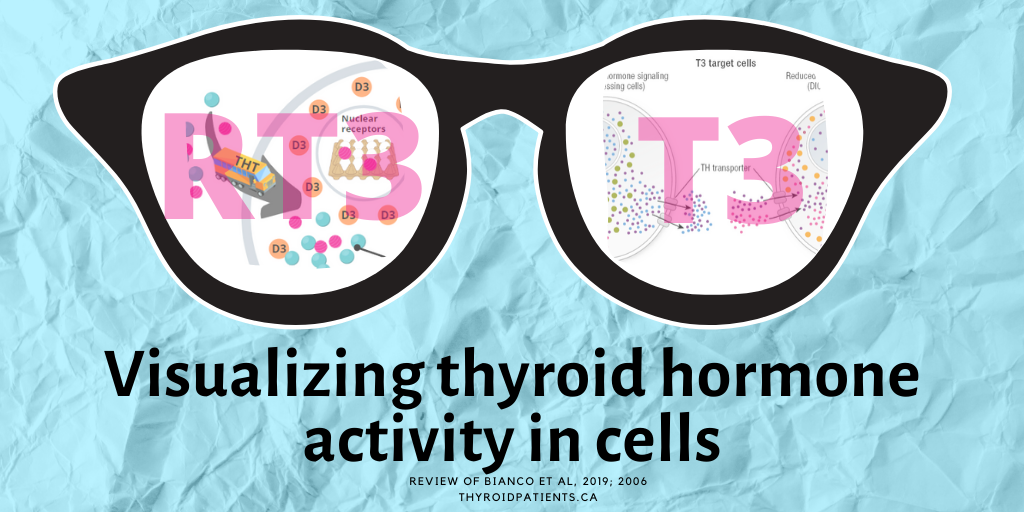
I’ve recently been inspired by an visual of thyroid hormone cellular action published by Bianco and colleagues in September, 2019. This visual has taught me a new way of seeing these hormones’ pathways of movement and activity in our bodies. I’ve read Bianco’s article quite thoroughly in light of the image, and as a result…
-
The basics of thyroid hormone action, transport and conversion

This comprehensive educational post collects the basics of thyroid hormone, transport and conversion. T3 action on nuclear receptors Every organ and tissue in your body must maintain a healthy level of T3 hormone activity to function properly. Bloodstream T3 supply and local T3 action powerfully influences how every organ operates, from our liver to our…
-
The TSH-T3 disjoint in thyroid therapy

There’s a deep lie behind today’s TSH-based definition of “euthyroid” status and today’s policies of TSH normalization in therapy. The lie is that the loss of the thyroid and the initiation of thyroid hormone dosing has NOT altered and skewed natural TSH-FT3-FT4 hormone relationships. Yes, thyroid disease and therapy DO alter and skew these functional…