
Tissue hypothyroidism
-
Prevalence rates for 10 chronic disorders at various FT4, TSH and FT3 levels

Which FT3, FT4 and TSH levels have the highest and lowest prevalence rates for 10 common health disorders? Hypertension Hyperlipidemia (high cholesterol) Depression Diabetes Coronary artery disease Heart failure Atrial fibrillation Peripheral vascular disease Renal failure (kidney failure) Dementia Is high-normal TSH and low FT3 associated with one condition, while high-normal FT4 and low or…
-
What can prevent T3 from getting into thyroid receptors?

This is part 2 of a post which began with the question “How do we get enough T3 into our thyroid hormone receptors?” In this post, I discuss the factors that can prevent T3 from getting into receptors. There are two factors that usually operate together: 1) the “variable rate” of T4 conversion in cells,…
-
How do we get enough T3 into thyroid hormone receptors?

In thyroid disease and therapy, even when TSH is normalized, we can still be genuinely hypothyroid if we do not have enough T3 getting into our thyroid hormone receptors in cells throughout the body. Most people know there’s two ways we get T3 into our cells’ nuclei: From circulating Free T3, and From circulating Free…
-
Visualizing thyroid hormone activity in cells: T3 and RT3 in context
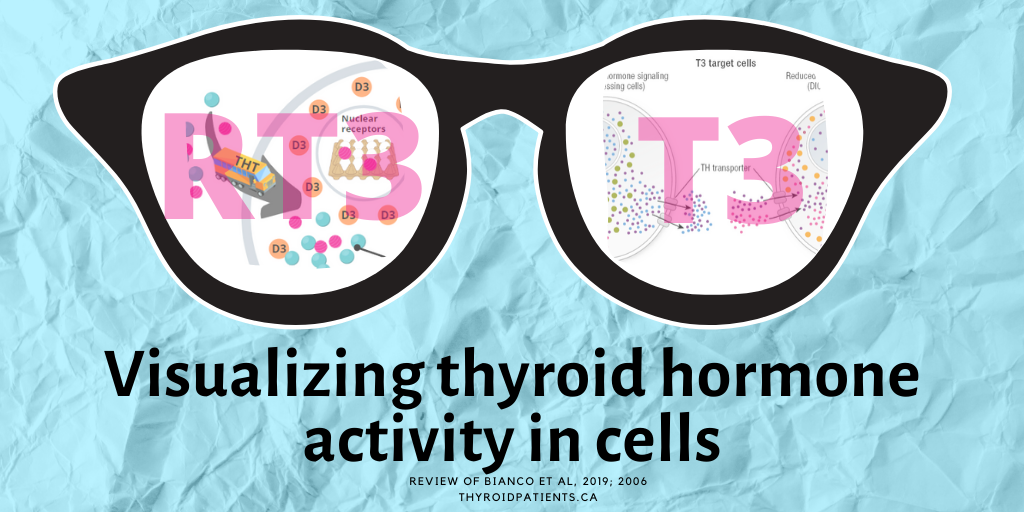
I’ve recently been inspired by an visual of thyroid hormone cellular action published by Bianco and colleagues in September, 2019. This visual has taught me a new way of seeing these hormones’ pathways of movement and activity in our bodies. I’ve read Bianco’s article quite thoroughly in light of the image, and as a result…
-
The basics of thyroid hormone action, transport and conversion

This comprehensive educational post collects the basics of thyroid hormone, transport and conversion. T3 action on nuclear receptors Every organ and tissue in your body must maintain a healthy level of T3 hormone activity to function properly. Bloodstream T3 supply and local T3 action powerfully influences how every organ operates, from our liver to our…